

A few summers ago, I bumped into Richard Bourdon at Berkshire Mountain Bakery. During our brief chat, he told me, among other things, he would never write a cookbook because he’s always changing his methods. I was shocked to hear this because I would have thought that after 30+ years of running his renowned bakery, he would know all there is to know about bread baking, that his formula would require zero tinkering, and that he and all of his staff could churn out the acclaimed BMB breads in their sleep.
But it was refreshing and reassuring to hear this, too, because I’m constantly changing how I make things, and I don’t know that I’ll ever stop. For the past few months, I’ve been making the base focaccia recipe from Bread Toast Crumbs, but trying different things: using more yeast, using less yeast, doing longer, slower rises at room temperature, doing longer, slower rises in the refrigerator.
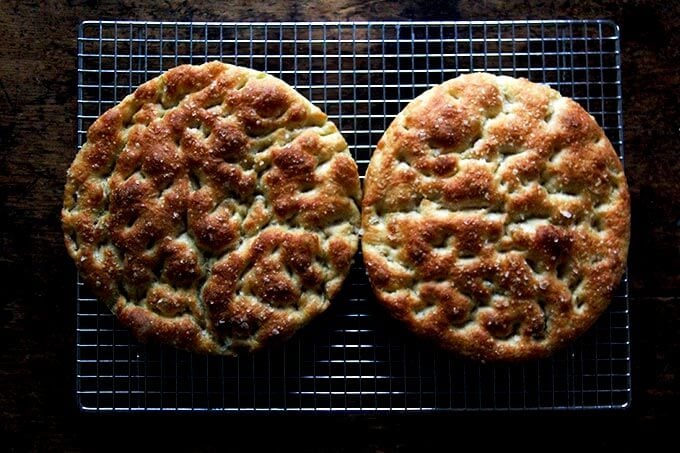
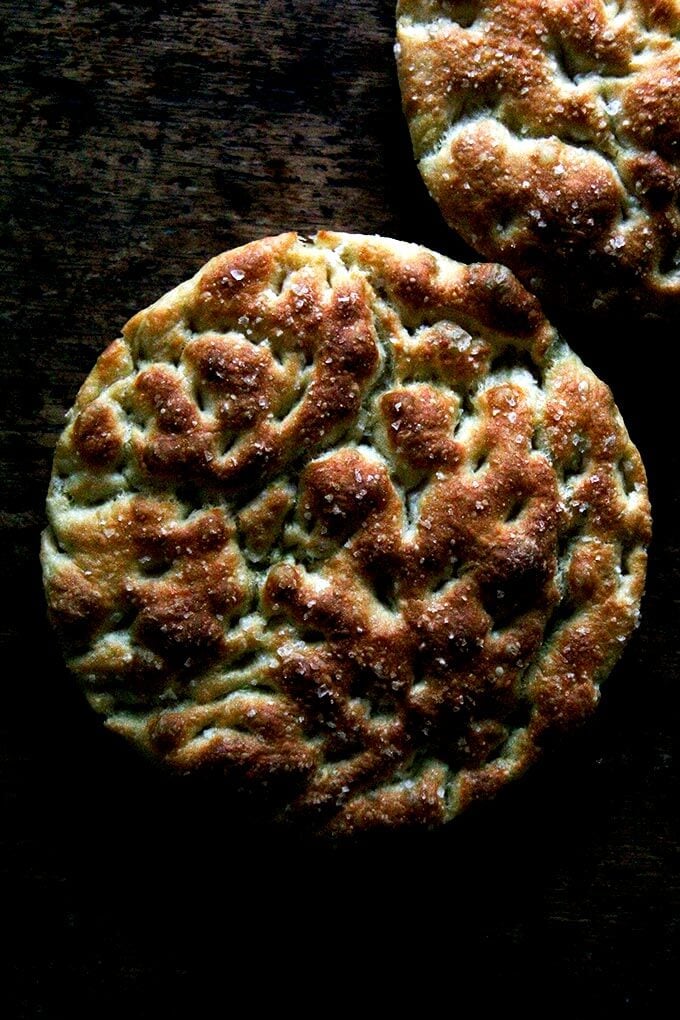
I’ll spare you all the details of the various experiments and skip straight to what I’ve found creates the best focaccia, one that emerges golden all around, looking like a brain, its surface woven with a winding labyrinth of deep crevices: refrigerated dough. This is nothing novel—many bakers extol the virtues of the cold fermentation process—and it came as no surprise to me either: it was, after all, past-prime Jim Lahey refrigerated dough that showed me how easy focaccia could be: place cold, several-days-old pizza dough in a well-oiled pan, let it rise for several hours or until it doubles, drizzle with more oil, dimple with your fingers, sprinkle with sea salt, then bake until done.
Employing a refrigerator rise takes time because the cold environment slows everything down initially, and during the second rise, the cold dough takes time to warm to room temperature. The overall effort, however, is very hands off, and the result is worth it. In sum, I’ve found:
- Allowing the dough to rest 18 to 24 hours in the fridge yields the best results.
- The amount of yeast doesn’t really matter.
- A buttered or parchment-lined pan in addition to the olive oil will prevent sticking.
- Count on 2 to 4 hours for the second rise.
- After the second rise, dimple the dough, then immediately stick the pans in the oven — this has been a critical difference for me in terms of keeping those desirable crevices. If you dimple and let the dough rise again even for 20 minutes before popping the pan in the oven, the crevices begin to dissolve. Note: The bread still tastes delicious without all of those crevices, but there’s something appetizing about the brain-like appearance … or is that just me?
Friends, if any of you are on Instagram, I have a step-by-step video highlighted in stories, which might provide some guidance. If not, I hope the photo play-by-play below will offer the same instruction. As always, I am here if you have questions.
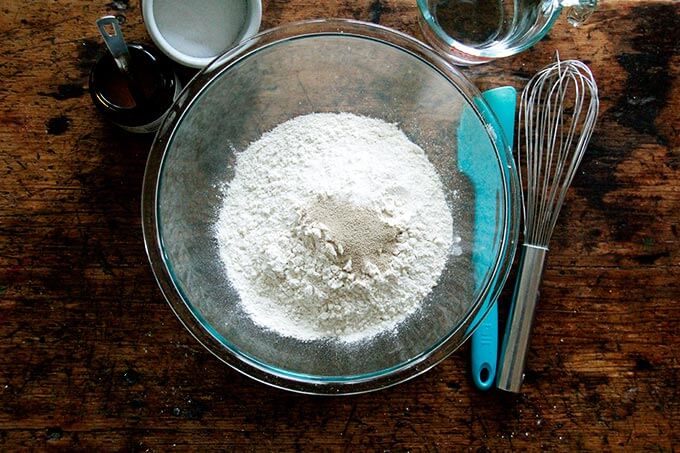
A familiar scene: 4 cups (512 g) flour, 2 teaspoons salt, 2 teaspoons instant yeast:
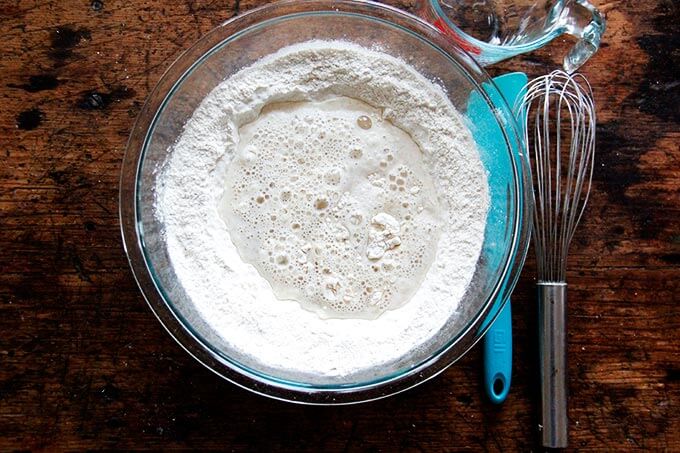
Add 2 cups lukewarm water:
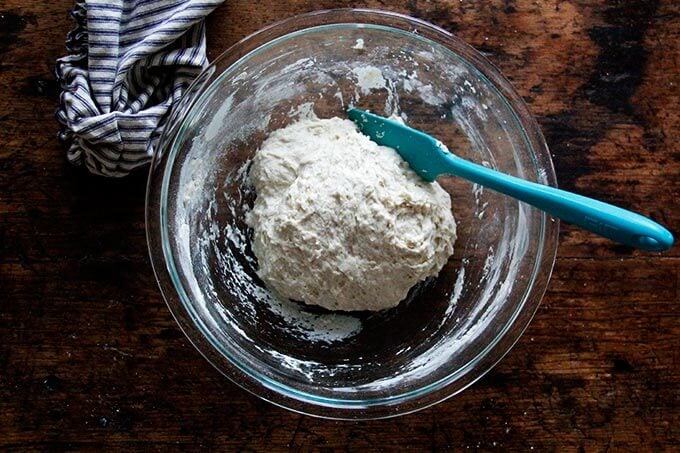
Mix dough:
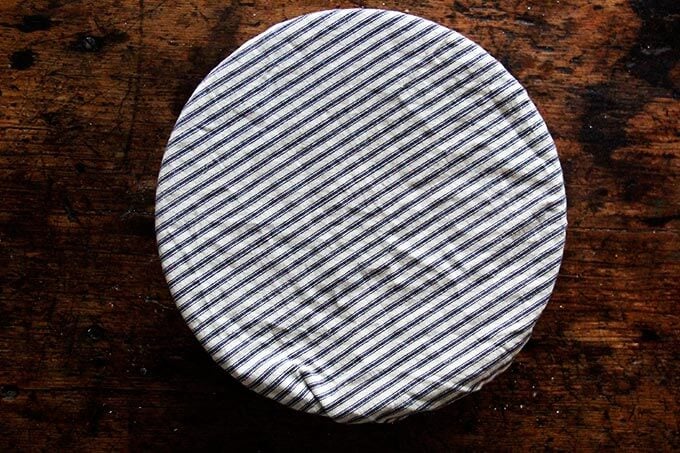
Cover bowl. You all have one of these, right? Stick bowl in the fridge immediately; leave it there to rise for 12 to 18 hours (or longer—I’ve left it there for two days).
Remove from fridge, and remove cover:
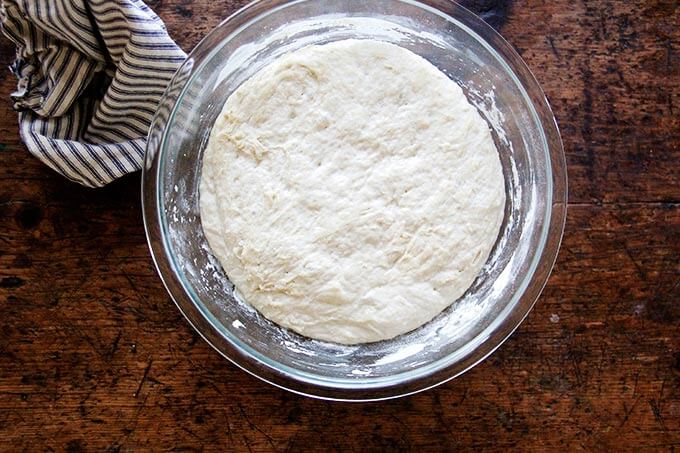
Deflate dough:
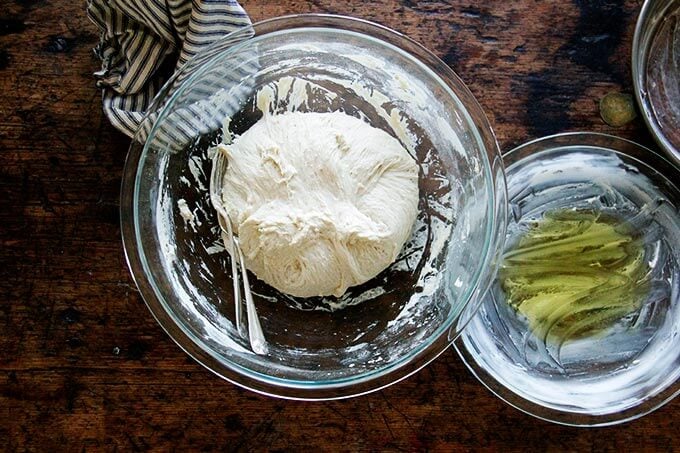
Butter or line with parchment paper two 8- or 9-inch pie plates or something similar; then pour a tablespoon of olive oil into each. (The butter/parchment will ensure the bread doesn’t stick.) Divide the dough in half and place each half into the prepare pans. Use your hands to turn the dough in the oil, creating a rough ball. Don’t touch the dough again for 2 to 4 hours depending on your environment.
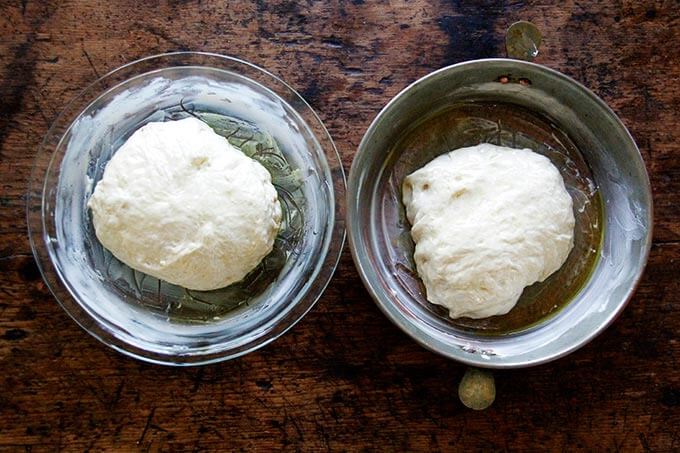
When the dough looks like this…
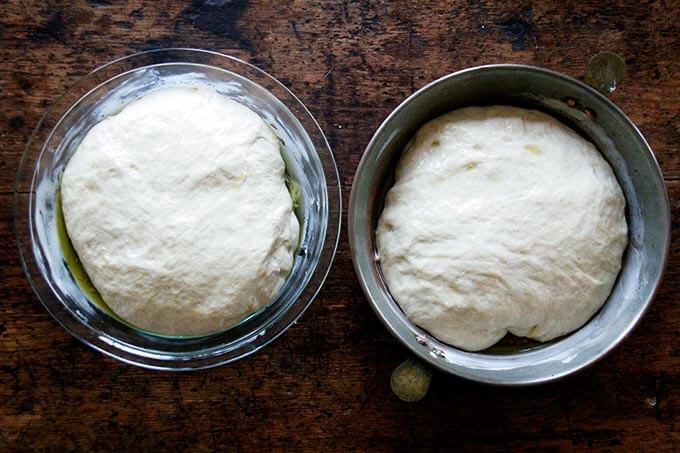
…pour another tablespoon of olive oil over each round, and using your fingers, press straight down to create deep dimples. Sprinkle with flaky sea salt, such as Maldon.
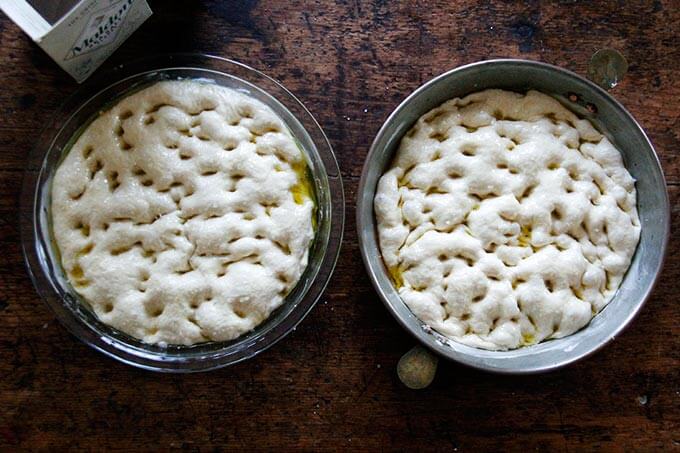
Transfer to oven immediately and bake at 425ºF for 25 minutes or until golden all around.
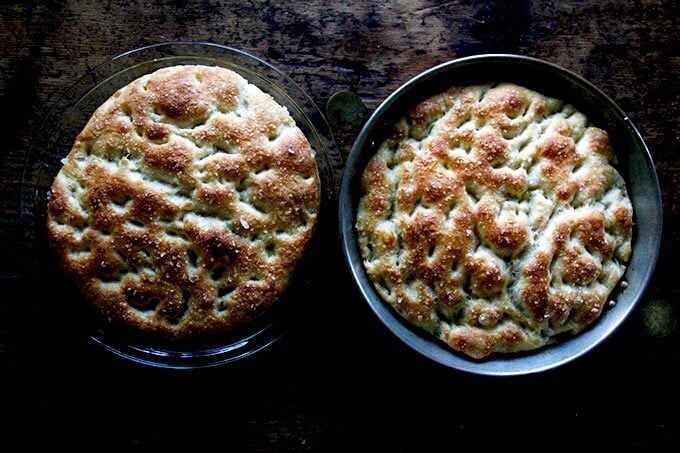
Focaccia brain.
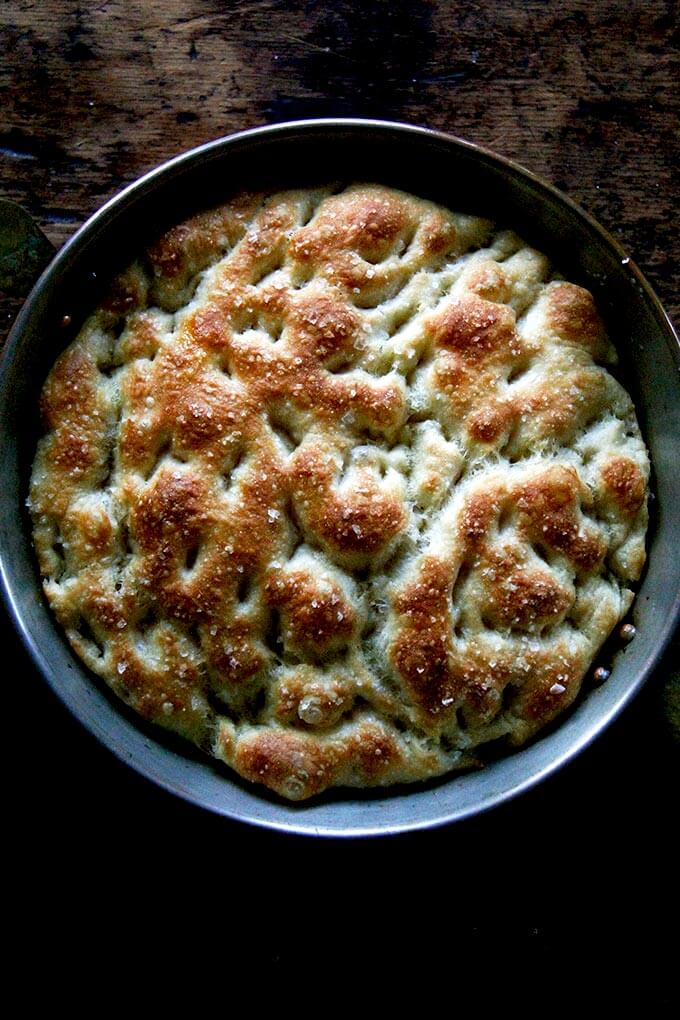
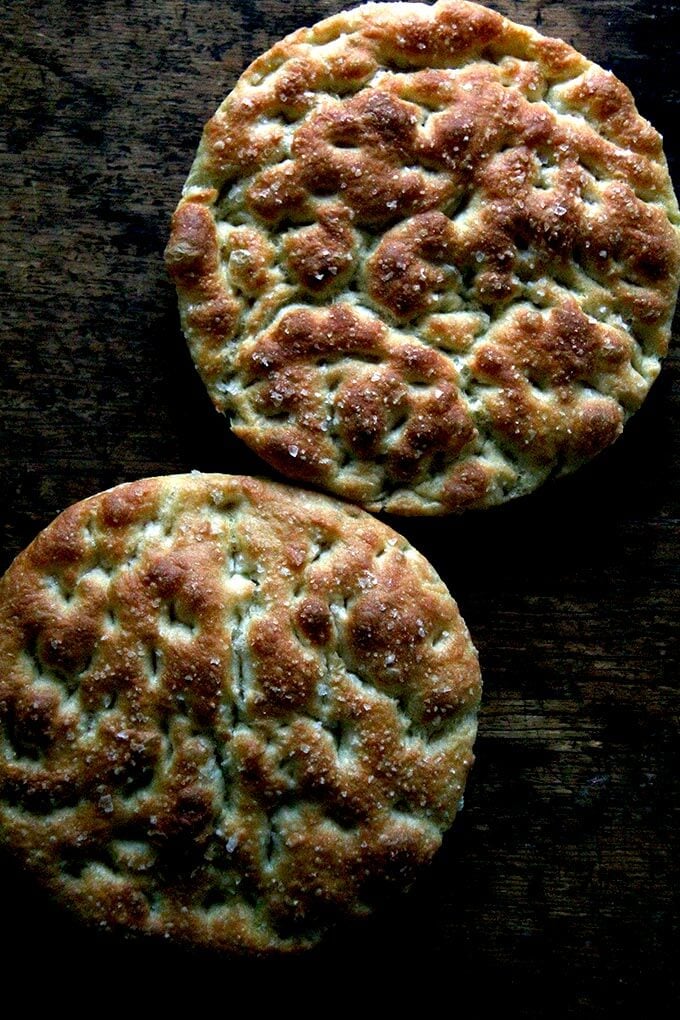
Remove focaccia from pans and place on cooling racks.
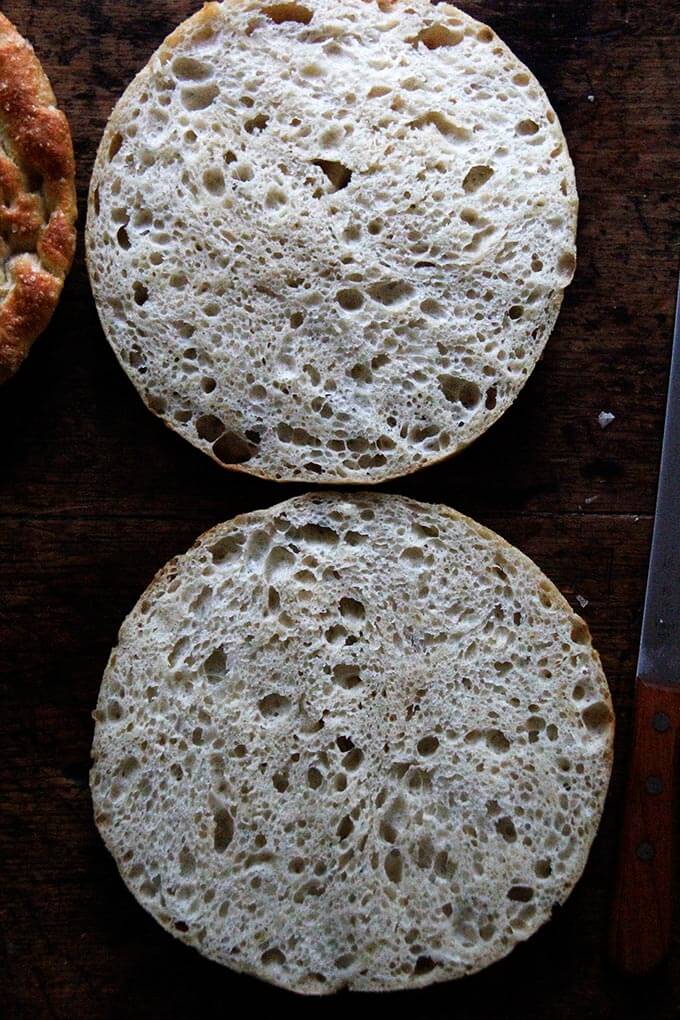
My favorite thing to do with these rounds of focaccia (besides serving them with olive oil and dukkah) is to make a slab sandwich. In the video below, the fillings include: mozzarella, prosciutto, arugula, and olive oil. Truth be told, the mozzarella brought little to the table here — is grocery-store mozz just not good? I would have been better off resorting to Gabrielle Hamilton’s three fats trinity: butter, prosciutto, and olive oil.

Overnight, Refrigerator Focaccia
Adapted from the focaccia and pissaladière recipes in Bread Toast Crumbs.
A few notes:
As always, for best results, use a digital scale to measure the flour.
I love SAF instant yeast. I buy it in bulk, transfer it to a quart storage container, and store it in my fridge for months. You can store it in the freezer also.
Plan ahead: While you certainly could make this more quickly, it turns out especially well if you mix the dough the day before you plan on baking it. The second rise, too, takes 2 to 4 hours.
Ingredients
- 4 cups (512 g) all-purpose flour
- 2 tsp. kosher salt
- 2 tsp instant yeast
- 2 cups lukewarm water, made by combining 1/2 cup boiling water with 1 1/2 cups cold water
- butter for greasing
- 4 tablespoons olive oil, divided
- flaky sea salt, such as Maldon
Instructions
- Make the dough: In a large bowl, whisk together the flour, salt, and instant yeast. Add the water. Using a rubber spatula, mix until the liquid is absorbed and the ingredients form a sticky dough ball. Cover the bowl with a damp tea towel or plastic wrap and place in the refrigerator immediately for at least 12 hours.
- Line two 8- or 9-inch pie plates (or something similar) with parchment paper or grease with butter or coat with nonstick cooking spray. Pour a tablespoon of oil into the center of each pan. Using two forks, deflate the dough by releasing it from the sides of the bowl and pulling it toward the center. Rotate the bowl in quarter turns as you deflate, turning the mass into a rough ball. Use the forks to split the dough into two equal pieces. Place one piece into one of the prepared pans. Roll the dough ball in the oil to coat it all over, forming a rough ball. Repeat with the remaining piece. Let the dough balls rest for 2 to 4 hours depending on the temperature of your kitchen.
- Set a rack in the middle of the oven and preheat it to 425°F. Pour another tablespoon of oil over each round of dough. Rub your hands lightly in the oil to coat, then, using all of your fingers, press straight down to create deep dimples. If necessary, gently stretch the dough as you dimple to allow the dough to fill the pan. Sprinkle with flaky sea salt all over.
- Transfer the sheet pan to the oven and bake for 25 to 30 minutes, until the underside is golden and crisp. Remove the pans from the oven and transfer the focaccia to cooling racks. Let it cool for 10 minutes before cutting and serving; let it cool completely if you are halving it with the intention of making a sandwich.
The post Overnight, Refrigerator Focaccia = The Best Focaccia appeared first on Alexandra's Kitchen.
Click here for more...
from #Bangladesh #News aka Bangladesh News Now!!!
No comments